

“Absolute doddle to use. Saved a fortune compared to the single-company quotes I was getting elsewhere. Car arrived safe and sound.”
David
21 Feb, 2026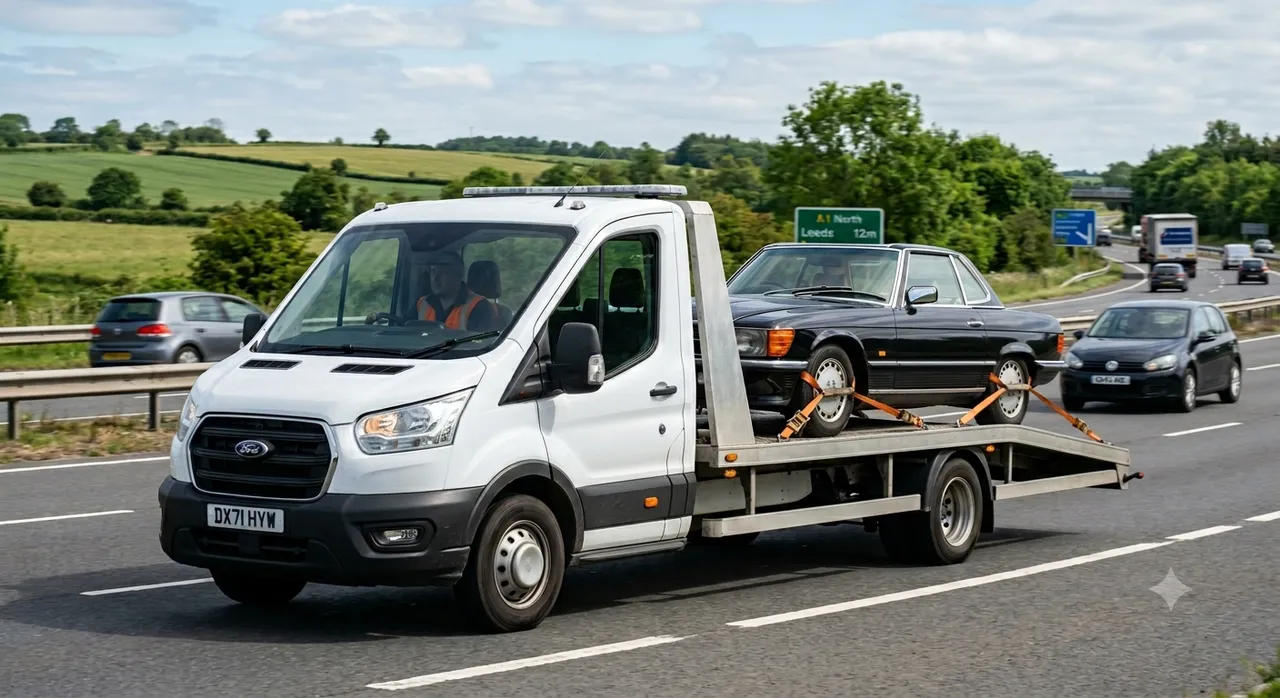
If you move vehicles for a living — or you're paying someone else to move yours — 2026 has been a year worth paying attention to. Two big stories are reshaping the industry at the same time.
The first is enforcement. The DVSA (Driver and Vehicle Standards Agency) and the Traffic Commissioners have been cracking down hard on non-compliant commercial vehicle transport. Operators using trailers to move cars for commercial purposes — especially multi-car movements — are being penalised, prohibited or even impounded when they lack a valid operator's licence or adequate load security.
The second is cost. Rising fuel costs through the first half of 2026 have squeezed margins across the whole transport sector, and those pressures feed directly into the price of every car transport job in the country.
This article pulls both threads together in plain English: what the crackdown actually means, who is at risk, and how fuel prices are reshaping what you pay (or charge) for vehicle delivery.
For years, a certain type of operator has run cars up and down the motorway network on a pickup-and-trailer setup without thinking too hard about licensing. That era is ending.
In its most recent enforcement push, DVSA has openly flagged an increase in the number of prohibitions issued to vehicles used for transporting cars — and has made that sector a high priority for targeted roadside enforcement, alongside construction traffic. In other words, car transporters are no longer slipping under the radar; they are specifically being looked for.
A few factors have combined to put vehicle movers front and centre:
It's important to be clear about who this affects. The crackdown is aimed at commercial movements — moving vehicles that belong to someone else, for hire or reward, as part of a trade or business. A private owner towing their own track car to a circuit on a small trailer is in a completely different position to a trader running two customer cars from Cardiff to Halifax for a fee.
If money changes hands to move someone else's vehicle, you are in scope for goods-vehicle rules — and that is exactly where DVSA and the Traffic Commissioners are focusing.
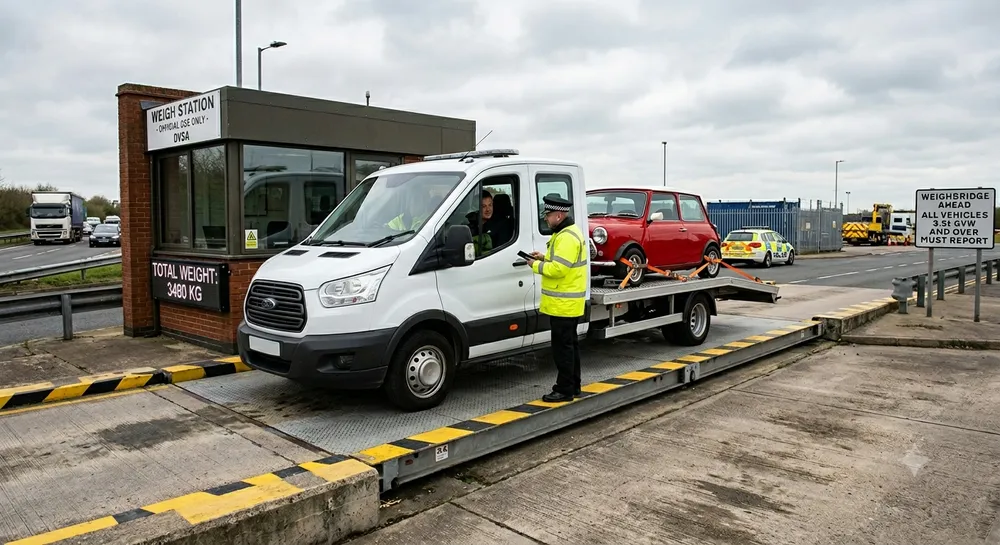
The single biggest change in tone has been the willingness to detain and impound vehicles. This is not a fine you pay and drive away from — it is the agency taking your vehicle off you at the roadside.
The power comes from the Goods Vehicles (Licensing of Operators) Act 1995 and the Goods Vehicles (Enforcement Powers) Regulations 2001, which allow an authorised examiner to detain a goods vehicle being used on a road without the authority of an operator's licence. There is usually a prior opportunity to get licensed, and a vehicle is detained where DVSA has reasonable cause to suspect it is still being used illegally.
Impounding typically happens where:
The owner of a detained vehicle can apply to DVSA, and then to the Traffic Commissioner, for its release and return — but that is a slow, costly process, and there is no guarantee the vehicle comes back.
The enforcement figures show this is real activity, not just a warning:
| Enforcement measure | 2024/25 | Year to date (Jun 2026) |
|---|---|---|
| Vehicles impounded (no operator's licence) | 45 | 38 |
| Successful operator-licence prosecutions | 31 | 26 |
On top of impounding and prosecution, DVSA continues to invest in new technology — automatic number-plate recognition, data-led targeting and roadside systems — to make compliance checks more efficient. The practical effect is that the odds of a non-compliant transporter being stopped are rising every year.
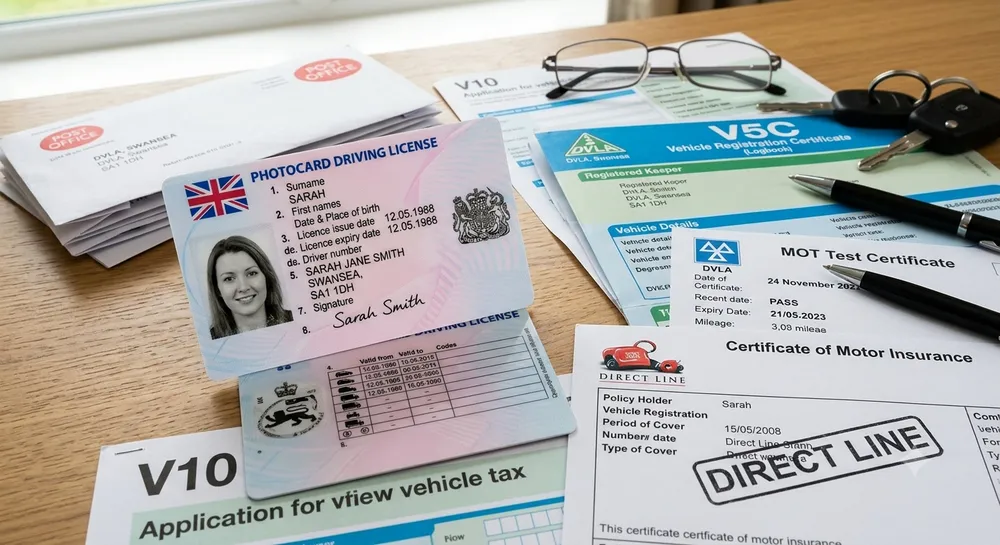
This is the rule that catches more car transporters than any other, so it's worth slowing down on.
The threshold that decides whether you need a goods-vehicle operator's licence is 3,500kg Maximum Authorised Mass (MAM) — but it is the MAM of the whole combination plus the load, not just the towing vehicle on its own.
A common tactic has been to down-plate a vehicle to 3,500kg in the belief that this avoids the operator-licensing regime entirely. The 2026 reality is blunt: if the vehicle and trailer together with the load exceed 3,500kg, and the combination is being used commercially to carry goods (cars) belonging to someone else, an operator's licence is still required — usually a Standard National goods vehicle operator's licence.
Down-plating the cab does not make two real cars on a real trailer weigh any less. Examiners weigh the actual combination, and the plated tricks fall apart on the axle pads.
A widely-discussed 2025 Traffic Commissioner case made the point in the clearest possible way. A vehicle was stopped by police while towing a trailer loaded with two cars belonging to another party, being moved commercially across the country. No operator's licence was displayed, and none could be produced.
Even though the towing vehicle had been down-plated, the combination plus load put it firmly over 3.5 tonnes and into operator-licensing territory. The outcome was the kind of regulatory action — and reputational damage — that can end a small transport business. The message to every trader running a pickup-and-trailer for profit was unmistakable: the down-plating loophole does not work.
If you want the full breakdown of where the licensing line sits, our guide on starting a car transport business in 2026 walks through every licence, threshold and insurance layer in detail.
Licensing is only half of what examiners are checking. Load security — how well the cars are strapped, chocked and restrained — is the other major focus, and it's an area where even licensed operators get caught out.
The principle DVSA applies is simple: a load must be secured so that it cannot move under heavy braking, swerving or an emergency stop. For car transport that means:
An insecure load can earn an immediate prohibition — stopping the vehicle until the problem is fixed — plus a fixed penalty, and it feeds into the operator's OCRS (Operator Compliance Risk Score), which makes future stops more likely. For the worst cases it becomes evidence in front of a Traffic Commissioner.
Our safety tips guide covers correct loading and securing technique in full, and it's worth a read for any provider who wants to stay on the right side of a roadside check.
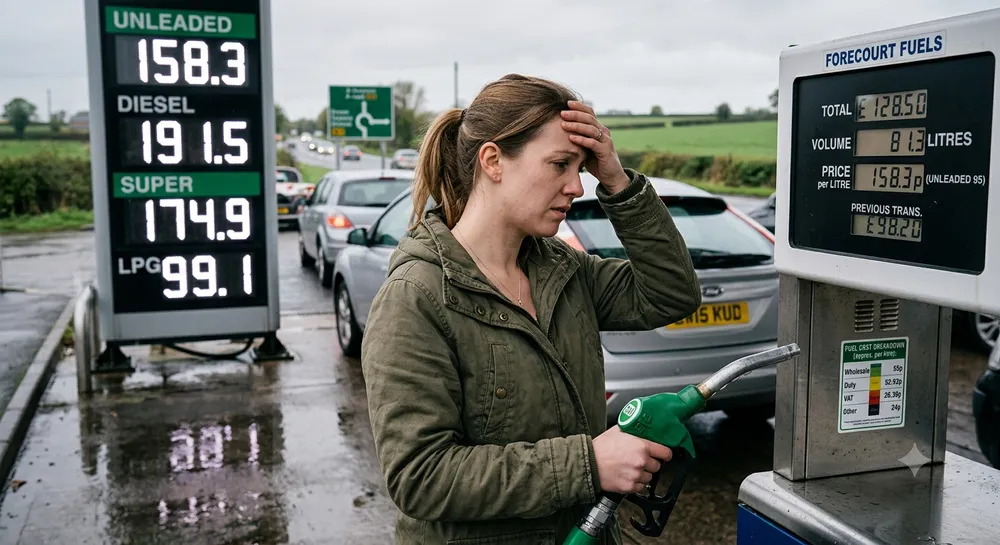
While the regulators have been busy, the other big 2026 story has been fuel costs — and they affect everyone, compliant or not.
After a relatively stable start to the year, fuel prices spiked sharply in spring before easing back. Recent UK pump averages tell the story:
| Period | Petrol (ppl) | Diesel (ppl) |
|---|---|---|
| Early 2026 (Jan–Feb) | ~131–132 | ~140–142 |
| Peak — mid-April 2026 | ~158 | ~192 |
| Mid-June 2026 | ~155 | ~177 |
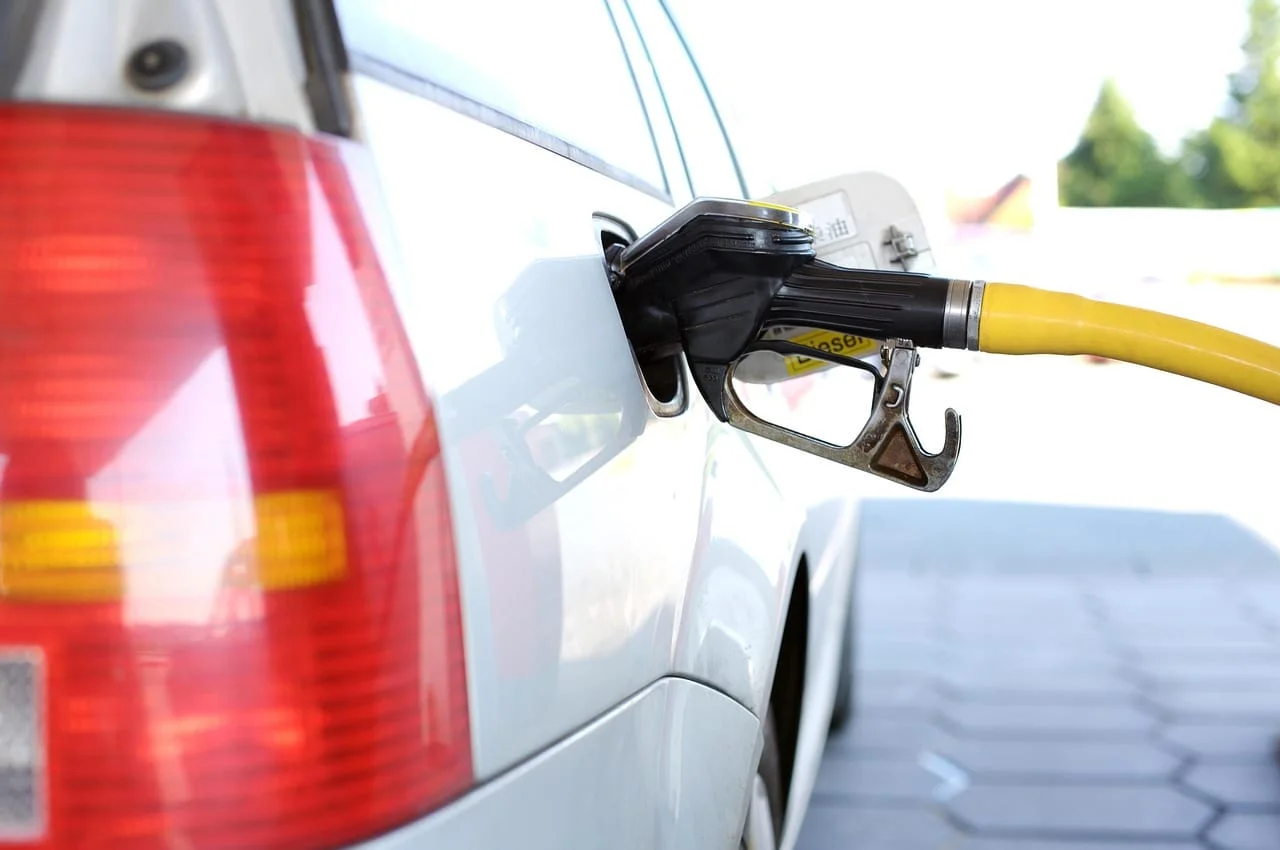
Diesel — the fuel that powers the overwhelming majority of transporters — hit roughly 192p per litre at its April peak, and even after falling back has stayed well above where it started the year. The diesel-to-petrol gap has widened to nearly 30p per litre, which hurts an industry that runs almost entirely on diesel.
It's also worth remembering how much of that price is fixed cost: fuel duty has stayed frozen at 52.95p per litre, with 20% VAT on top, so a large slice of every litre is tax regardless of what the wholesale market does.
For most households, a fuel price rise is an annoyance. For a transport operator it's an existential margin problem, because fuel is around 30% of total running costs. A few pence per litre is the difference between a profitable job and a loss-making one.
The squeeze is made worse by:
For a deeper look at the mechanics, our dedicated article on how fuel prices impact vehicle transport costs breaks down exactly how a pence-per-litre move turns into pounds on a quote.
When fuel rises, it doesn't stay the operator's problem for long — it shows up in quotes. In practice that means:
The crackdown is, on balance, good news for owners. A more heavily policed industry is a safer industry, and it pushes work towards the legitimate, properly insured operators you'd want carrying your vehicle anyway.
To protect yourself:
The simplest way to do all of this is to post your job and let verified providers bid — see how it works on the car transport service page.
For providers, 2026 is a "get your house in order" year. The operators who thrive will be the ones who treat compliance as a competitive advantage rather than a cost.
Our best practice guide goes deeper on pricing, communication and reputation for working providers.
Both of 2026's big stories point in the same direction: towards a more professional, more transparent marketplace — which is exactly what MotorMoves is built for.
For owners, that means safer, fairer-priced transport. For providers, it means a steady flow of real jobs that reward doing things properly. Post a job or join as a provider to get started.
2026 has drawn a clear line under an old way of doing things. The DVSA and the Traffic Commissioners have made it plain that commercial car transport over 3.5 tonnes without an operator's licence — or with sloppy load security — is a fast route to a prohibition, a prosecution or an impounded vehicle. At the same time, rising fuel costs have removed any remaining slack from operators' margins.
The operators who come out ahead will be the licensed, insured, well-run ones who treat compliance and efficiency as part of the service. The owners who come out ahead will be the ones who book through verified channels and compare their quotes. On both counts, a transparent marketplace is the place to be — get the paperwork right, watch the fuel, and let competition do the rest.
Full guide to licensing thresholds, Operator's Licence, CPC and insurance.
How a pence-per-litre move turns into pounds on your quote.
Correct loading, securing and route-planning every operator needs.
Pricing, communication and reputation tips for working providers.
How owners search for car transport and how to get competitive quotes.
We use cookies and similar technologies to provide essential website functionality, analyse site usage, and deliver personalised content. You can choose to accept all cookies, reject non-essential cookies, or customise your preferences.
For more information, please read our Cookie Policy and Privacy Policy.