



“Absolute doddle to use. Saved a fortune compared to the single-company quotes I was getting elsewhere. Car arrived safe and sound.”
David
21 Feb, 2026
The time of year can change a car transport booking as much as the distance. A route that is straightforward on a quiet weekday may become harder to schedule during a new-registration rush, a bank-holiday getaway or a spell of ice and strong winds. The aim is not to find a season with no problems, but to understand which constraints are likely and prepare for them.
This UK guide explains the seasonal pressures that affect collection dates, delivery windows and quotes. It covers everyday cars, dealer purchases, classic vehicles, non-runners and electric cars, with practical checks you can use before accepting a quote. It also separates sensible planning advice from promises no transporter can reliably make.
The short answer: enquire early, confirm that the car is actually ready for release, offer a realistic date window and prepare both addresses for safe access. Choose the transport method around the car's condition and value, not simply the month on the calendar. No booking can guarantee that severe weather or a road closure will not affect the journey.
| Period | Main planning pressures | Useful action |
|---|---|---|
| January and February | Ice, storms, short days and reduced access | Allow weather contingency and check loading space |
| March | New-registration handovers and dealer scheduling | Confirm release paperwork before fixing collection |
| April and May | Easter travel, bank holidays and spring events | Check holiday dates and the exact route |
| June to August | Holiday traffic, household moves and motoring events | Ask early about enclosed capacity and flexible dates |
| September | New-registration handovers and returning commuter traffic | Agree dealership appointments and realistic windows |
| October and November | Rain, fog, low sun, storms and darker evenings | Plan a well-lit inspection and monitor forecasts |
| December | Festive closures, holiday journeys and delivery deadlines | Confirm both parties' opening hours and a fallback date |
These are planning patterns, not a national tariff or a claim that every operator is fully booked in these months. Local demand, vehicle size, route direction and the type of truck available can matter more than the season alone. Compare car transport services with a complete description of the job.

The March and September number-plate changes concentrate new-car handovers into familiar periods in Great Britain. For 2026, the age identifiers are 26 from March and 76 from September. The wider logistics chain includes factory movements, dealership deliveries, lease replacements and collection of part-exchange vehicles, so your individual booking can overlap with several other movements.
The Society of Motor Manufacturers and Traders provides a useful illustration of how seasonal this market is. In its release dated 4 September 2026, SMMT reported 94,236 new-car registrations in August 2026, up 13.7% on August 2025. It described August as a typically quiet month because buyers defer purchases ahead of the September plate change, and noted that August usually accounts for around 4% of annual new-car registrations.
SMMT Chief Executive Mike Hawes put the distinction plainly: “But August is a low-volume month, so September will be the acid test.” This quotation concerns the new-car market, not transporter prices or an endorsement of MotorMoves. It explains why a quiet month for registrations should not be mistaken for a guaranteed quiet period for every collection route. Read the original SMMT release.
For a dealer purchase, ask whether preparation, payment clearance, registration and release authorisation are complete. A salesperson saying that a car should be ready is not the same as the handover team confirming a collection slot. Give the transporter the correct department, named contact and opening hours, and check whether identification or a collection reference is required.
Avoid booking a truck against an estimated factory arrival date unless the cancellation and rescheduling terms are clear. If the car is not released, a waiting driver may lose the next appointment as well. Written readiness confirmation is often more useful than paying extra for a narrow time slot that the seller cannot yet support.
A Christmas delivery can involve a vehicle gift, a house move, a dealer purchase or a car needed for family travel. The difficulty is that several deadlines converge while drivers, dealerships, auction sites and receiving businesses may reduce their hours. There is no single national shutdown date for vehicle transport, so check each participant rather than assuming normal opening.
Ask the seller for the last collection date, the transporter for its working schedule and the recipient for a suitable delivery window. Bank holidays and school holidays differ across the UK; a route crossing borders may encounter different local patterns. A closed destination can be a bigger problem than a congested motorway.
If the car must arrive before a particular celebration, build in a buffer rather than booking the final possible day. Agree what happens if weather prevents delivery: can it arrive earlier, is secure storage available, and who pays for an additional movement? A contingency agreed before collection is much easier to manage than one negotiated beside a locked gate.
Seasonal photographs can make snowy delivery look appealing, but safe access takes priority over presentation. A truck should not be expected to reverse down an untreated slope for a surprise reveal. Arrange a safe, level handover area, and do not keep the recipient so completely out of the plan that nobody can accept the vehicle.
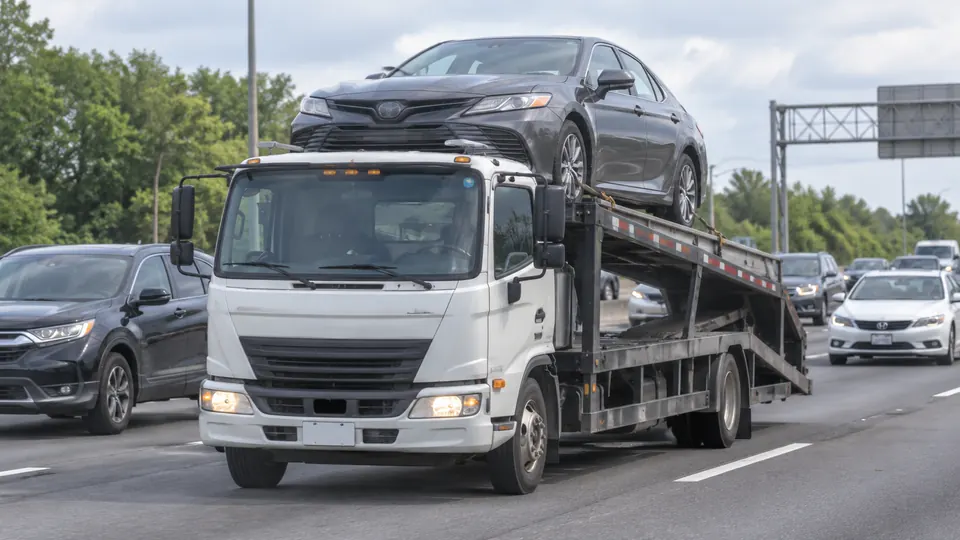
Long daylight hours help with inspections and loading, but summer does not mean empty roads. Holiday journeys, festivals, sporting fixtures and local events can affect routes well beyond the event itself. A transporter collecting several cars may be delayed before it reaches your postcode, even when the road outside your home is clear.
In a forecast published on 24 August 2026, the RAC estimated 20 million leisure car trips over the late-August bank-holiday weekend, with 4.1 million planned for Friday 28 August. Its report also cited INRIX predictions of delays of up to 75 minutes on the southbound M5 between junctions 15 and 23 around midday that Friday. These were forecasts for a specific weekend, not measured journey totals or a prediction for every future bank holiday.
That example shows why a map's normal journey time is not a delivery promise. A delay can also push a driver beyond a dealership's collection hours or require the schedule to change to respect applicable driving-time and rest rules. Read the RAC forecast and its route details.
For a classic-car show, track event or auction, confirm access times, accreditation, unloading space and the return journey. Enclosed capacity may be less flexible than general open-carrier availability, particularly when several owners need the same event dates. Do not assume a truck can stay on site until the event finishes.
Household moves add another uncertainty: the vehicle may be ready before the keys to the new property are available. Agree who can receive it and whether an alternative address is acceptable. A wider date window can help the provider combine compatible jobs, but any saving depends on the route and actual availability.
Weather can affect the truck, the car being moved and the ground where loading takes place. A gritted main road does not make an icy driveway safe. Snow can hide kerbs, ramps, potholes or low bodywork, while freezing conditions may prevent doors, brakes or locks operating normally.
The Highway Code gives useful context for realistic timing. Rule 227 says wet-weather stopping distances are at least double those on dry roads. Rule 230 says stopping distances on ice or snow can be ten times greater. These are road-safety warnings, not a formula for multiplying your delivery time, but they explain why maintaining the normal schedule may be unsafe.
The same guidance advises against driving in icy or snowy conditions unless the journey is essential. A responsible provider may postpone a collection when conditions are unsuitable. Ask how weather-related changes are communicated and what the booking terms say about rescheduling, rather than treating a refusal to load on ice as poor service.
Arrange a well-lit inspection area if collection or delivery may happen after dark. Clean bodywork makes existing marks easier to record, but avoid washing a car immediately before collection if the water will freeze on the access surface. Use dated photographs and a written condition report; neither party should be rushed into signing in a dark, unsafe location.
Road salt and spray can leave an open-carried vehicle dirty. That does not automatically mean it has been damaged, but heavy grime may make inspection harder. Agree how to record any concern promptly, follow the vehicle manufacturer's cleaning advice after delivery and do not sign an unqualified condition statement if you cannot reasonably inspect the car.
Strong wind is particularly relevant to transport because the Highway Code identifies high-sided vehicles as most affected by gusts. Exposed bridges and coastal roads may have restrictions or closures. An enclosed vehicle offers protection from road debris, but its body does not remove the route's wind restrictions.
Heavy rain creates spray and standing water, and floods can make an otherwise short route impassable. Do not ask a driver to enter floodwater to meet a deadline. Tell the provider if either address is known to flood, and agree another safe location only when both parties can access it legitimately. A car already affected by floodwater must be described as such before collection.
Fog and low sun can reduce visibility in autumn, winter and spring. The Highway Code's 100-metre visibility threshold for headlight use illustrates how weather can demand a change in driving behaviour. It does not mean a transporter can safely load wherever visibility exceeds that distance; roadside loading needs its own assessment.
Hot weather also deserves attention. The Highway Code warns that road surfaces may soften and that rain after a dry spell can make them slippery. For driven delivery, tyres, cooling-system condition and the driver's welfare matter. For a car being carried, keep loose objects and temperature-sensitive possessions out of the cabin and follow any storage instructions.
Check Met Office weather warnings for the whole route, not just the destination. A warning's impact depends on its location, timing and the vehicle involved. Check the relevant road authority's live information as well; warnings and road closures are different sources of information.
It can, but there is no reliable universal “winter premium” or “September surcharge”. Prices depend on distance, route compatibility, vehicle dimensions and weight, running condition, loading equipment, urgency and the transport method. Seasonal demand can reduce the number of suitable providers, while poor weather can add operational time.
A short journey is not necessarily cheap per mile because dispatch, loading and handover still take time. Equally, a longer flexible journey may fit an existing route. An enclosed single-car movement on a fixed date should not be compared directly with an open multi-car delivery over several days.
Request like-for-like quotes. Specify whether the car starts, steers, rolls and brakes, describe modifications and give accurate postcodes. Ask whether VAT, tolls, ferry charges, waiting time, storage and non-runner handling are included where relevant. Establish what happens if the seller is late releasing the vehicle or the destination is closed.
Be cautious of very low prices coupled with pressure to pay immediately or move communication elsewhere. Busy periods can make buyers feel rushed, but urgency is not a reason to skip provider checks. Our car transport safety and scam-prevention guide explains the paperwork and payment questions to ask.
For a fixed-date peak-season movement, starting enquiries three to four weeks ahead is a useful planning target, especially for enclosed transport or an event. It is not an industry-wide minimum, a guarantee of availability or proof that you will avoid every surcharge. Routine routes may be arranged sooner; remote locations or specialist requirements may need longer.
Separate an enquiry from a confirmed booking. You can investigate providers while waiting for a car to be ready, but understand when charges become payable and whether dates can change. Confirm the service in writing once the seller's release arrangements are sufficiently reliable.
If practical, offer a 48–72-hour collection or delivery window rather than insisting on one hour. Treat that as a negotiated option, not a promise that every operator can use it. Explain any genuine constraint, such as an auction deadline or a ferry connection, so the provider can decide whether the job fits.
Ask when you will receive a narrower arrival estimate and who will contact you if it changes. A date window should not mean having no information. Confirm whether collection and delivery have separate windows, and whether the vehicle may spend a night in storage between them.
Open transport is a practical option for many everyday cars. The vehicle travels on a truck or trailer, avoiding additional driven mileage, but remains exposed to weather, spray and road grime. Proper restraint, vehicle suitability and a clear condition report still matter in every season.
Enclosed transport offers added protection from weather and debris and can suit classic, high-value or particularly delicate vehicles. It is worth considering for winter movements, but it is not compulsory simply because it is cold. Confirm internal dimensions, ramp clearance, payload, insurance and whether enclosure is provided for the entire journey.
Driven delivery may suit a roadworthy car when additional mileage is acceptable. Confirm the driver's insurance and the legal requirements for the journey, as well as fuel or charging costs and expected mileage. It is not a suitable substitute for recovery of a car with unsafe tyres, a serious warning light or an unresolved mechanical fault.
For electric cars, agree enough charge for loading, unloading and the expected journey. A driven EV needs a charging plan; a carried EV still needs model-appropriate loading procedures and working access. Avoid universal charge percentages: the manufacturer's instructions, route and operator's requirements should guide the plan.
Clean and document the vehicle. Photograph all sides, wheels, visible lower bodywork and the interior in good light. Record existing damage, mileage, warning lights and the fuel or charge level. Do not crawl beneath an unstable or damaged car to obtain a photograph.
Check operating condition. Tell the provider about a weak battery, flat tyre, sticking brake, missing key or starting fault. Cold weather can expose existing battery problems, and a car that cannot move on collection day may require different equipment. Arrange repairs or describe it honestly as a non-runner rather than assuming the driver will fix it.
Agree fuel and accessories. Around a quarter of a tank may be sufficient for manoeuvring a healthy combustion-engined car being carried, but follow the operator's requirements and allow more for driven delivery. Secure charging cables and list accessories on the handover record. Remove valuables and loose belongings; a transported car should not become an undeclared household-removals load.
Prepare access. Provide photographs of tight gates, slopes or narrow roads, and disclose height and parking restrictions. Clear safe access where you can do so without risk. The transporter decides whether loading is safe; an alternative level meeting point may be necessary.
Arrange the people and paperwork. Ensure an authorised person can release and receive the car. Share the collection reference, contact numbers and opening hours. Keep keys available, and agree secure access without handing over personal account passwords. Confirm who can approve a change if weather or traffic disrupts the plan.
Ask for evidence of insurance suitable for your vehicle and service, including the relevant limit, excess and treatment of loading, unloading and storage. “Fully insured” alone does not explain the policy. A high-value classic car may need a more detailed discussion than an everyday hatchback.
At collection, review the condition report with the driver and keep a copy. At delivery, compare the vehicle with that record, check keys and listed accessories, and note any new damage or warning. Take photographs promptly and follow the provider's claims procedure if something is wrong. Do not assume every mark is transport damage, but do not ignore a discrepancy either.
When a delay occurs, ask for the reason, a revised estimate and the available choices. Distinguish a traffic delay from the car not being collected at all. If storage or another movement is proposed, clarify its location, insurance and charges before agreeing.
Never pressure a driver to skip rest, exceed safe speeds or unload somewhere dangerous to recover lost time. The useful questions are whether the car is secure, who is responsible for the next step and when you will hear again. A written contingency plan protects both the customer and the operator.
The best seasonal plan is specific rather than optimistic. Book with the information the transporter needs, allow realistic flexibility and choose the method that suits the car. Those decisions do more to prevent problems than chasing a supposedly cheapest month or assuming every delivery can happen at an exact hour.
Editorial note: this guide was researched on 8 November 2026. The registration figures and holiday-traffic forecast are dated examples, not live availability data or MotorMoves pricing statistics. Weather guidance comes from the Highway Code; individual journeys still require current checks and professional judgement. The supplied images illustrate scenarios and do not document particular MotorMoves jobs or prescribe safe loading techniques.
Choose a service suited to your route, vehicle and dates.
Explore extra protection for valuable or delicate cars.
Plan collections for shows, storage and specialist vehicles.
Arrange suitable equipment when a car cannot move normally.