


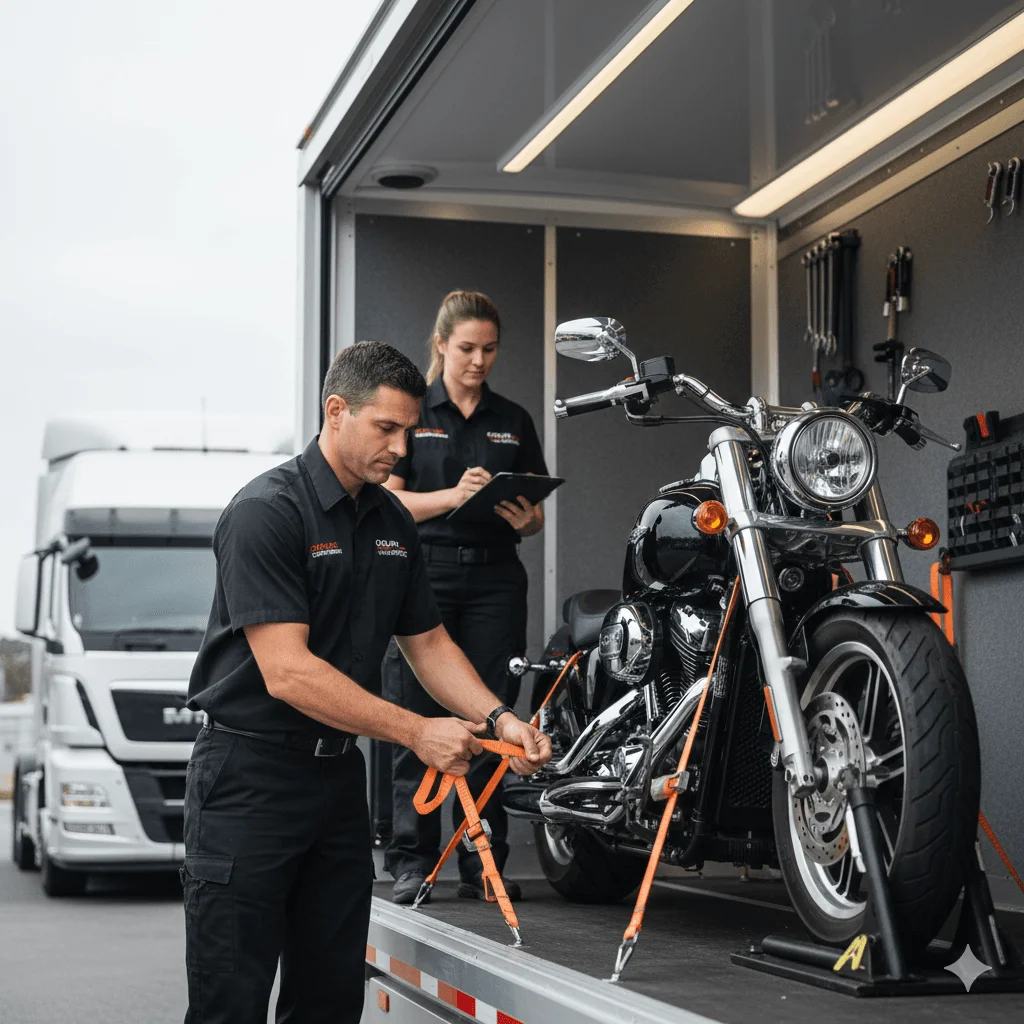
“Spot on. First time shipping a car and this marketplace made it effortless. Got plenty of competitive quotes quickly. The driver I chose was lovely and kept me updated the whole way down from Edinburgh.”
Chloe
6 Feb, 2026
Booking a car collection should solve a problem, not create a missing deposit, an uninsured journey or a dispute over where your vehicle has gone. Whether you have bought at auction, need a non-runner moved or want door-to-door delivery, the safest booking starts with checks before money or keys change hands.
This UK guide explains how to compare car transport providers, recognise social-media scams and understand what verified marketplaces and payment protection can—and cannot—do. It is written for customers ready to book, with practical questions to ask before accepting a quote.
The quick answer: verify the actual business and driver, check insurance for your specific vehicle and movement, agree an itemised written price, and understand who receives each payment. Do not let a cheap quote or an urgent collection deadline replace those checks.
UK Finance's Annual Fraud Report 2026 findings, published on 15 June 2026, describe fraud reported by its members during 2025. They are useful background, not a measurement of car-transporter fraud.
| Verified finding | What it means for someone booking transport |
|---|---|
| £1.28 billion lost to payment fraud in 2025 | Fraud is a substantial UK problem; professional-looking messages are not enough |
| 66% of authorised push payment fraud cases began online | Treat adverts, marketplace messages and social profiles as leads to verify |
| Purchase scams made up 71% of APP fraud cases | Paying for goods or services that never arrive is a major fraud category |
| Purchase-scam losses reached £118.1 million | An apparently small advance payment can be part of a larger criminal operation |
Fake social profiles and advance-payment requests are risks worth taking seriously.
A typical warning pattern is a helpful reply to your Facebook group post: “I am passing tomorrow; send a deposit now to hold the space.” The supposed transporter has convincing truck photographs, enthusiastic comments and a price below every other quote. Once the deposit is transferred, the excuses start—or the account blocks you and nobody arrives.
This is an illustrative scam pattern, not a claim about a particular business. Genuine transporters also advertise on social media and sometimes require deposits. The danger is the combination of an unverified identity, pressure to act, weak written terms and a payment you cannot easily recover.
A profile can be copied or compromised. Truck photographs and followers do not verify today's operator. Search the business independently and call an established number.
Keep the quote and payment request. If someone says the marketplace is “broken” and requests payment elsewhere, verify through the platform.
Not every late collection is fraud. Traffic, breakdowns and poor planning can cause genuine failures. Some “cowboy” operators perform work but cut safety corners; deliberate scammers may never intend to deliver anything. These warning signs help you decide when to stop and investigate.
Other warning signs include cloned company identities, altered invoices, unauthorised substitute drivers and paid “recovery agents” promising to retrieve stolen deposits. Verify changes through an established contact. Never share banking security codes or describe a transport payment as a gift.
How it works: a rogue operator offers an unusually cheap collection, then adds fuel, ferry or access charges after you commit. A quote 40–50% below competing offers followed by a £150–£300 demand is an illustrative example, not a measured industry average.
Why it succeeds: an auction storage deadline makes starting again expensive. Check: request an itemised, written total and conditions for additional charges before accepting. A genuine return-load discount should still have clear terms.
How it works: a fake advert leads to a deposit request, followed by a dead phone and a missed collection. Why it succeeds: customers mistake a UK sort code and account number for proof of legitimacy.
Check: verify the business and recipient independently. A bank transfer is not itself evidence of fraud, but refusal to explain identity, terms or alternative payment options is a warning. Recovery rights depend on the payment system; do not assume Bacs and Faster Payments have identical protection.
How it works: someone accepts the job without appropriate vehicle-carriage cover, leaving a serious dispute if your car is damaged on a ramp or during transit. Why it succeeds: “insured van” sounds like “insured load,” but these are different questions.
Check: ask for cover appropriate to carried vehicles, including loading and unloading. Public liability alone is not goods-in-transit insurance, and ordinary private vehicle cover should not be assumed to cover commercial carriage. The actual policy wording determines cover.
How it works: a driver presents counterfeit, expired or improperly used trade plates as permission to drive any vehicle. Why it succeeds: the red-and-white plates appear official.
Check: confirm legitimate trade-licence use, suitable insurance, roadworthiness and MOT requirements where applicable. Trade plates are not blanket permission to drive an uninsured or unroadworthy car. Uninsured driving can result in seizure; consequences depend on the offence, not simply the presence of trade plates.
How it works: a driver demands an unagreed cash surcharge at delivery, citing London's Congestion Charge, ULEZ or another city's Clean Air Zone. Why it succeeds: your car is still on the trailer.
Check: agree responsibility for route charges beforehand. Liability depends on the vehicle entering the zone and the applicable rules; carrying a car does not automatically mean the carried car incurs a separate charge. Ask for evidence and report threats rather than risking a confrontation.
How it works: the collector claims a gate, late-collection or forklift fee must be reimbursed immediately. Why it succeeds: genuine auction collections can involve booking rules and additional charges.
Check: obtain an itemised receipt and verify it directly with the auction site's published contact details. Confirm authorised costs before collection. References to Copart, BCA or Synetiq do not authenticate a claim; these are examples of auction businesses, not allegations against them.
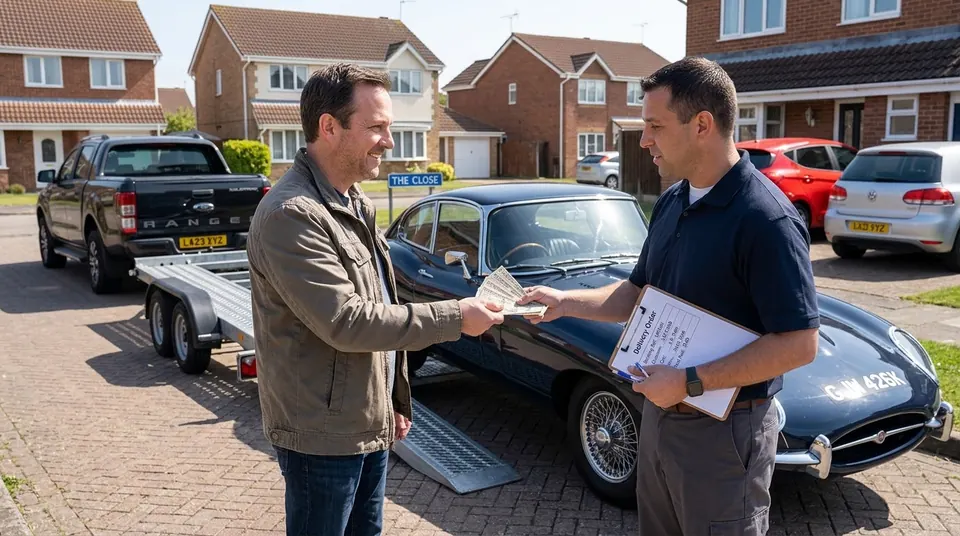
A deposit is not automatically a scam, and “no deposit” is not automatically safe. A genuine provider may reserve a specialist trailer or a dedicated journey. What matters is whether the amount, purpose, cancellation terms and recipient are clear before you commit.
Agree cancellation terms and distinguish the marketplace fee from the transporter's deposit.
Avoid paying the full transport charge upfront to an unknown person simply because they offer a discount. If a deposit is required, request an invoice identifying the business, job and remaining balance. Choose a payment method with appropriate protection where available; a transfer receipt proves payment, not legitimacy.
Walk away if: the provider refuses basic insurance questions, demands immediate payment to an unexplained third party or says checking their identity will lose your slot. A credible professional should be able to explain their booking process without intimidation.
“Fully insured” is a starting point for a question, not an answer. A carried vehicle may need goods-in-transit cover appropriate to vehicle transport; driven delivery needs suitable road-risk arrangements. Ordinary private motor insurance or public liability alone should not be assumed to cover your car in transit.
Ask whether the limit applies per vehicle, per claim or across the entire load. A policy adequate for a £6,000 hatchback may not be adequate for a £90,000 classic. Check excesses, unattended-vehicle conditions and whether a non-runner or damaged EV changes the cover.
For licensing, GOV.UK's goods vehicle operator guide explains that an operator's licence is usually required above 3.5 tonnes for goods vehicles or relevant combinations, with specific exceptions. International hire-or-reward movements can bring in a threshold above 2.5 tonnes. The actual operation matters; “recovery truck” is not a universal exemption for routine car delivery.
Ask how the provider has checked usable payload, axle limits, ramps and load restraint for your vehicle. A truck's gross permitted weight is not its available payload. If the vehicle looks unsuitable or the loading method unsafe, stop the handover and seek clarification instead of relying on assurances that “we do it all the time.”
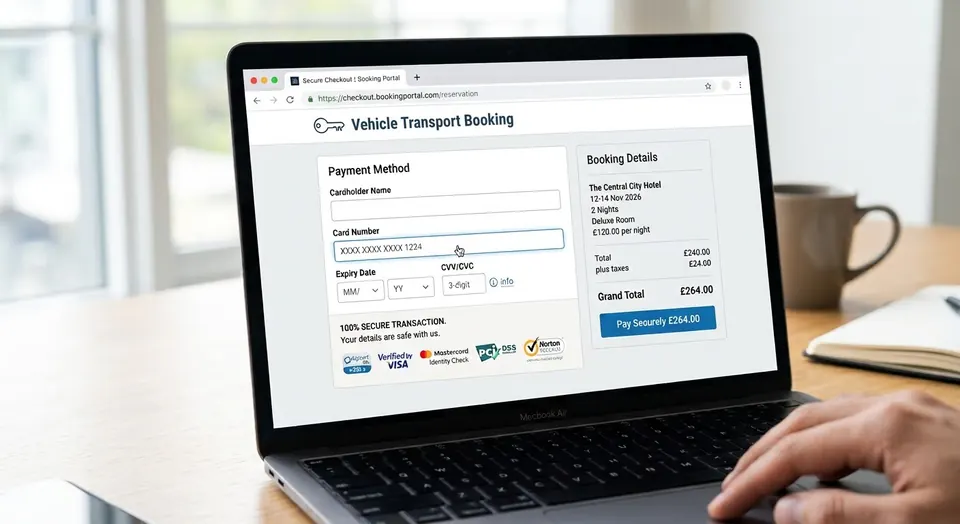
Secure processing protects the payment process; it does not guarantee that a supplier will perform the job. Understand the transaction you are making, who supplies the service and the conditions of any claim route.
| Payment route | Potential protection | Important limitation |
|---|---|---|
| Credit card paid towards the transport service | Section 75 may apply to an eligible service costing more than £100 and up to £30,000 | Contractual and payment-chain conditions matter; not every intermediary arrangement qualifies |
| Debit or credit card chargeback | Card-scheme dispute process for eligible problems | It is not a statutory guarantee; deadlines and evidence requirements apply |
| UK bank transfer | Eligible APP scam claims may fall within reimbursement rules | Ordinary contractual disputes and some payments are outside scope |
| Cash | Receipt can document payment | No card chargeback or Section 75 route for that cash transaction |
| Platform fee through Stripe | Recognised processor for the specific platform payment | It does not automatically insure or protect a separate transporter payment |
MoneyHelper's card-payment guidance explains that even a part-payment by credit card can qualify for Section 75 where its conditions are met. The relevant price is the qualifying service's price, not simply the deposit amount. Ask your card issuer about your actual arrangement rather than assuming a small platform fee protects the entire delivery.
The Payment Systems Regulator's July 2026 dashboard reports £316 million reimbursed—88% of the value of reimbursable APP scam losses—in the 18 months to 31 March 2026. This is not a promise of recovery: scope, exclusions and the £85,000 maximum reimbursement level matter. A transporter being late is not automatically an APP scam.
Never trust a checkout solely because it displays payment-brand logos or a padlock. Open the real website independently, check the address and compare the amount with the accepted booking. Do not enter card details into an unexpected “delivery release” or “refund verification” link.
There are reputable businesses in each channel. Compare the safeguards of the actual booking, not just where you first saw the advert.
| Booking route | What can help | What you still need to check |
|---|---|---|
| Informal social-media message | Local recommendations and quick contact | Identity, genuine reviews, insurance, written terms and recipient |
| Established provider booked directly | Clear accountability and direct service knowledge | Current cover, equipment, contract and payment protections |
| Marketplace with provider verification | Structured quotes, provider profiles and a documented booking trail | What verification covers, who performs delivery and who receives each payment |
| MotorMoves | Admin-approved providers, profile information, job messaging and Stripe platform-fee processing | Job-specific insurance, delivery arrangements and transporter payment terms |
Reviews inform a decision but are not insurance. Look for actual job details and problem resolution.
MotorMoves uses a provider verification process rather than allowing a newly registered account to bid immediately. Providers submit business and transport details and supporting documentation, with administrator approval required before quoting. Its published process includes licence and insurance checks, recognising that an operator's licence may not be required for every operation.
The platform's provider profiles, ratings, written bids and job messages make it easier to compare offers and retain evidence than relying on an anonymous social-media conversation. Keep your pre-booking discussions on the platform, and check that the vehicle, method and any special requirements are included in the accepted agreement.
Payment distinction: MotorMoves processes its platform listing fee through Stripe. The transporter's charge and payment arrangements are separate and must be agreed with that provider. Do not assume MotorMoves holds the full delivery price in escrow, guarantees a transporter deposit or extends card protection from its own fee to another transaction.
These controls provide meaningful checks, but no marketplace, vetting process or payment processor eliminates every risk. Insurance can expire, circumstances can change and genuine disputes can arise. Verify the current documents and the actual driver before collection, and contact MotorMoves through its contact page if a request seems inconsistent with your booking.
First distinguish a delay from suspected dishonesty. Contact the provider through the agreed channel, request a clear revised time and keep a written record. Check the cancellation terms. If you booked through MotorMoves, report the issue with your listing details so the platform can review the account and booking evidence.
If you suspect a scam, contact your bank or card issuer immediately using its app or an independently verified number. Explain whether you made a bank transfer or card payment and ask about the appropriate fraud, chargeback or Section 75 process. Do not wait for another promised refund before notifying your bank.
Save the advert, profile link, messages, invoices, payment details and booking reference. Report suspected fraud via Report Fraud in England, Wales and Northern Ireland; in Scotland contact Police Scotland on 101. If a crime is happening now or someone is in immediate danger, call 999.
If your vehicle has already been collected and you suspect theft, tell police and your insurer promptly. Give the collector's details, registration, handover time and vehicle identifiers. Do not confront someone yourself or pay an unexplained “release fee” in response to threats.
Choose an evidenced quote with suitable insurance and written terms—not a rushed promise of “cheap transport today.”
Start with Car Transport, compare the transport categories, or read How It Works before listing your vehicle. Request quotes with accurate job details, then use the checklist above before you accept.
Editorial note: researched for October 2026 using the sources below.
We use cookies and similar technologies to provide essential website functionality, analyse site usage, and deliver personalised content. You can choose to accept all cookies, reject non-essential cookies, or customise your preferences.
For more information, please read our Cookie Policy and Privacy Policy.