


“Quick, easy, and cheap. Had my Mini moved from Cardiff to Bristol in no time. 10/10.”
Harry
7 July, 2026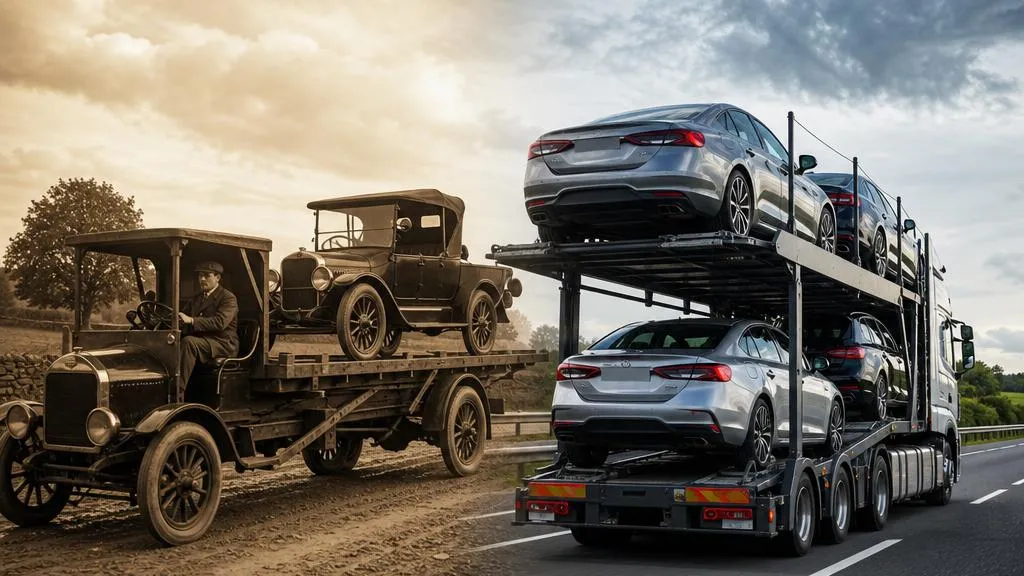
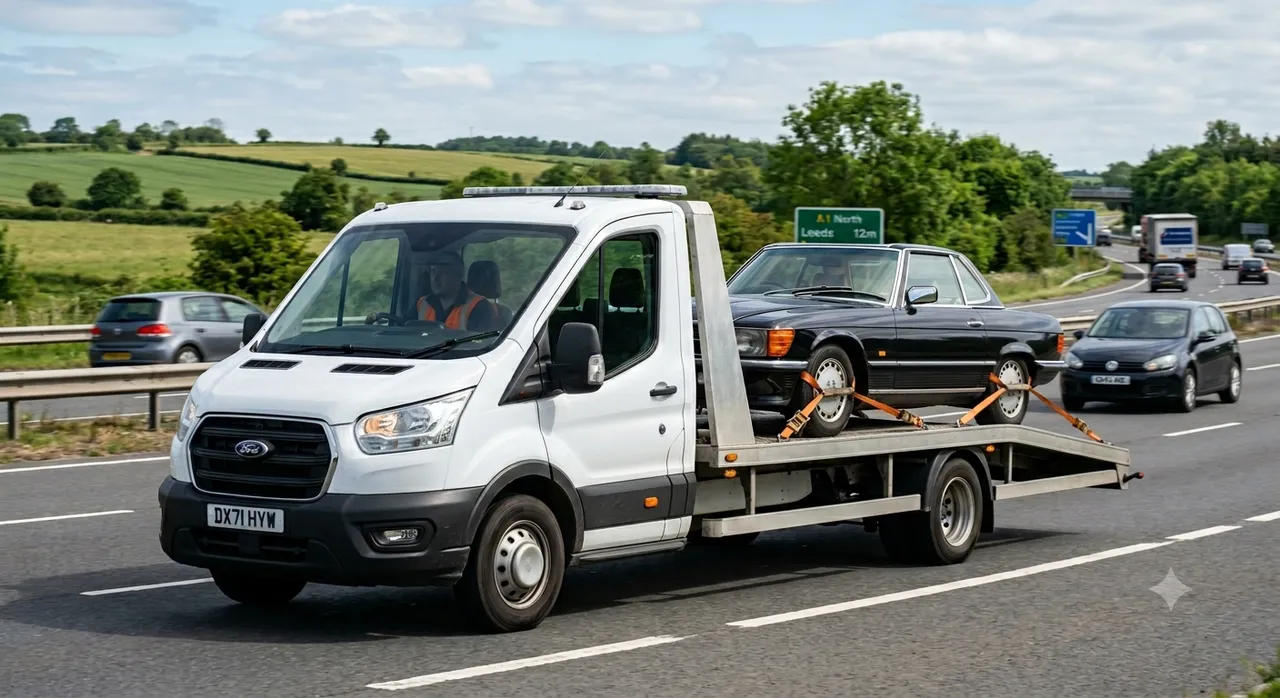
Behind Britain's long love affair with the motor car sits an industry most people never think about: vehicle logistics. Before any car reaches a showroom floor or a buyer's driveway, it has almost certainly been moved by someone else — on a transporter, a railway wagon or a roll-on/roll-off ship. This is the story of how the UK learned to move millions of cars safely, efficiently and at enormous scale, from the 1900s right up to the online marketplace era of 2026.
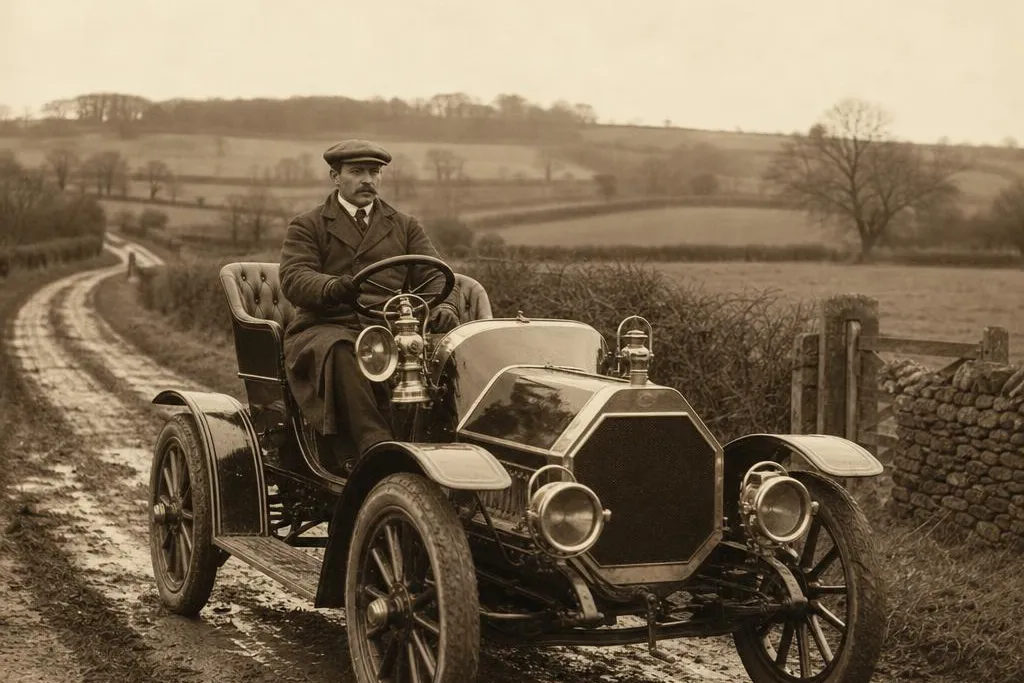
In the earliest days of British motor manufacturing, factories in Coventry, Birmingham, Oxford and Manchester had no transport fleets at all. Every finished car was delivered the only way possible: somebody drove it there.
These were the original trade-plate drivers. The Motor Car Act 1903 introduced vehicle registration to Britain, and with it came the trade plate — allowing unregistered, untaxed, factory-fresh vehicles to be driven legally on public roads while in the motor trade's hands. An army of drivers in flat caps and overcoats collected cars from factory gates and drove them, often for days, over unsurfaced roads to dealerships across the country.
It worked, but only just. Every delivery put miles on the odometer of a supposedly new car. Pristine paintwork arrived peppered with gravel chips and mud. And as production grew, the number of drivers needed became absurd. By the mid-1920s hauliers had begun adapting flatbed lorries to carry a single car — loaded up crude wooden ramps by muscle power — and the age of the car transporter had quietly begun.
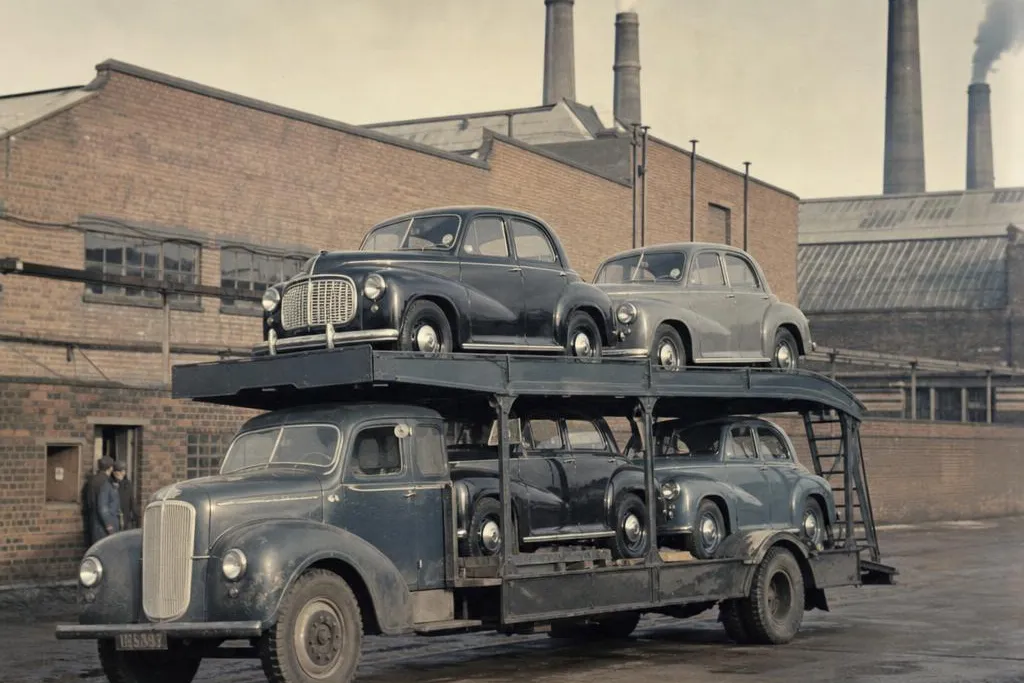
Mass production changed everything. As plants like Morris's Cowley works and Austin's vast Longbridge complex pushed out cars in ever greater numbers, delivering them one at a time became a crippling bottleneck. The industry needed bulk haulage.
Through the 1930s, single-car flatbeds steadily replaced trade-plate drivers on longer runs. Then, in the late 1940s and early 1950s, British engineering firms — Carrimore among the best remembered — pioneered the rigid double-deck car transporter. By 1953 the first double-deck rigs capable of carrying four to six cars were appearing on British roads.
Two further innovations supercharged capacity:
The opening of Britain's first motorways from 1958-1960 sealed the transformation, allowing longer articulated rigs to cruise between factories, ports and dealer networks at speeds the trade-plate pioneers could only have dreamed of.
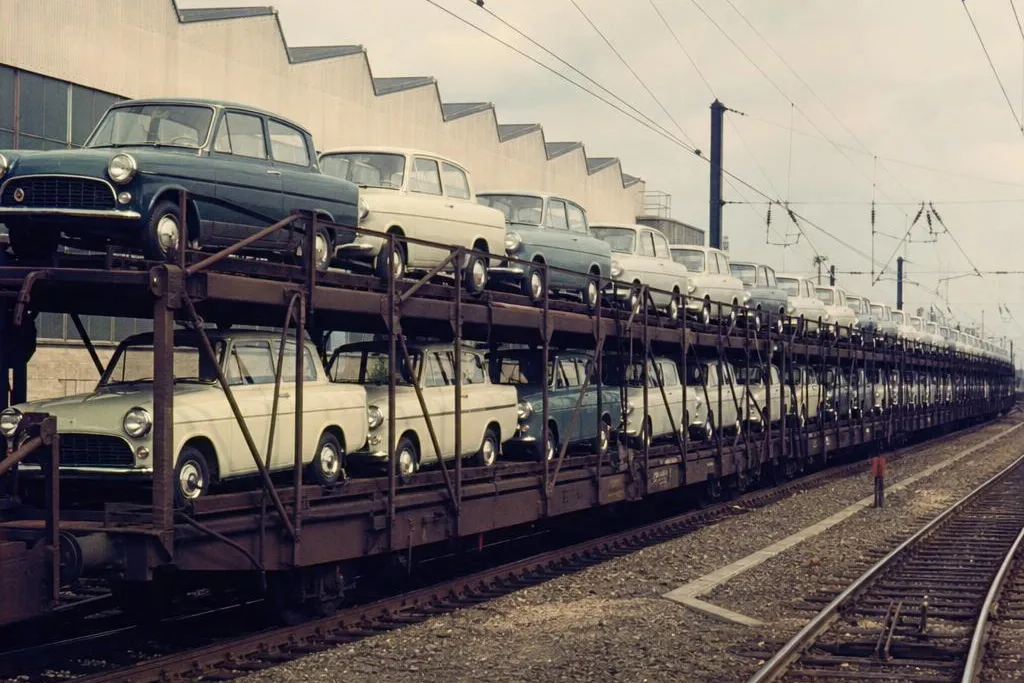
While transporters conquered the roads, British Railways was building a parallel empire. As the UK became one of the world's great vehicle exporters, dedicated automotive rail networks took off.
The milestones came quickly:
The other revolution happened at the dockside. Roll-on/roll-off (Ro-Ro) shipping replaced the slow, risky business of craning individual cars into cargo holds: vehicles were simply driven aboard multi-storey ocean car carriers. Grimsby and Immingham, Southampton, Portbury and Tyne became the great gateways of the British motor trade — and remain so today, with Grimsby & Immingham handling hundreds of thousands of vehicle movements a year as part of the UK's busiest port complex.
The 1980s and 1990s reshaped what was being moved as much as how. Nissan opened its Sunderland plant in 1986 — for years Britain's most productive car factory — followed by Toyota at Burnaston and Honda at Swindon, all feeding enormous flows of vehicles to ports and dealerships. Specialist logistics giants emerged to serve them, running liveried fleets with precision-engineered hydraulic decks.
Regulation tightened alongside. Today's UK car transporters operate within strict Department for Transport limits:
By the 2000s, satellite tracking, load-planning software and digital tachographs had turned what was once a strongman's trade into a precision logistics operation.
One of the defining challenges of the modern era is that cars themselves have outgrown the equipment built to move them. The average new car sold in Britain today is dramatically longer, wider and heavier than its 1990s equivalent.
Vehicle size inflation quietly reshaped the economics of the whole industry: fewer cars per load means more journeys, more fuel and higher per-car costs — one reason moving a heavy EV typically costs more than moving a small petrol hatchback.

The biggest change of the last decade has nothing to do with hydraulics or horsepower — it is where the work comes from. In 2026, the majority of UK vehicle movements are arranged online, through marketplaces and digital platforms rather than phone-around quotes.
The numbers behind that shift are striking. Britain registers around two million new cars a year and the used market turns over more than seven and a half million transactions annually — and every one of those vehicles has to get somewhere. Online car buying, remote auctions run by the likes of BCA and Copart, and dealer-to-door delivery models mean a huge share of cars are now sold to buyers who never visit the vehicle before it arrives.
That created exactly the problem marketplaces solve:
For the customer, a process that once meant a week of phone calls now takes minutes on a phone screen. For the industry, digital work-finding has opened the market to thousands of small, specialist operators — from enclosed supercar carriers to motorcycle couriers — who can fill their schedules without a sales office.
From a lone driver in a flat cap nursing a Morris across dirt roads, to a 44-tonne double-deck rig threading the M6 with eleven vehicles aboard and its next three jobs already booked through a marketplace — UK car transport has spent 125 years becoming the invisible engine of the British motor trade.
The next chapters are already being written: electric and hydrogen transporter fleets, ever-smarter load matching, and delivery experiences that look more like tracking a parcel than booking a lorry. Whatever powers the trucks, one thing has not changed since 1903 — every car still needs someone skilled to move it.
We use cookies and similar technologies to provide essential website functionality, analyse site usage, and deliver personalised content. You can choose to accept all cookies, reject non-essential cookies, or customise your preferences.
For more information, please read our Cookie Policy and Privacy Policy.